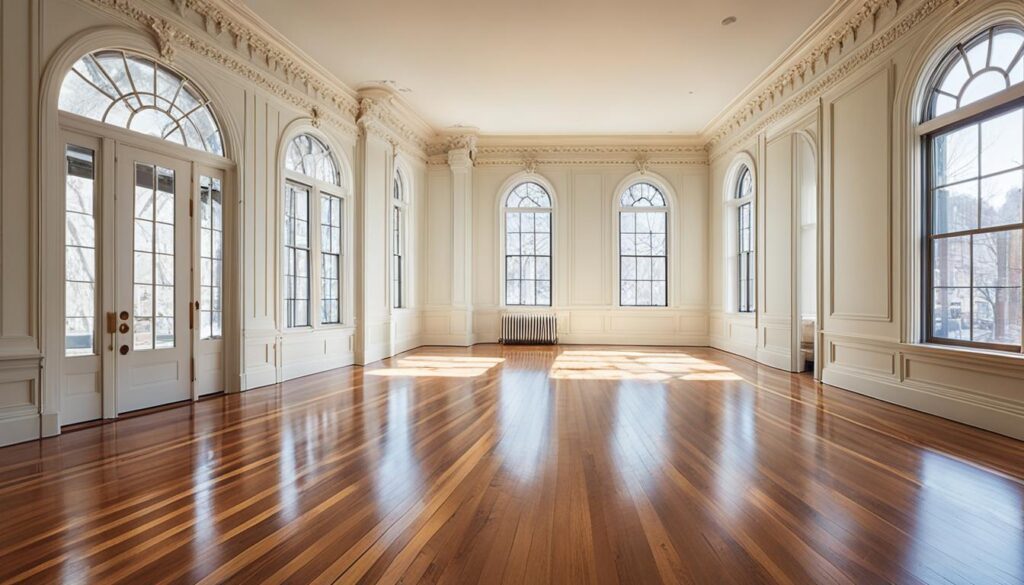
Vintage wood floor restoration techniques can help transform new hardwood floors into authentic, aged masterpieces. By using methods such as hand scraping, wire brushing, staining and bleaching, faux aging with paint, filling cracks and gaps, and applying a patina, homeowners can achieve a weathered and antique look for their floors. These techniques add character and charm to the flooring, creating a timeless and enchanting atmosphere in any space.
Key Takeaways
- Vintage wood floor restoration techniques can transform new hardwood floors into authentic, aged masterpieces.
- Hand scraping and wire brushing are popular methods used in vintage wood floor restoration.
- Staining, bleaching, and faux aging with paint offer a range of possibilities for aging hardwood floors.
- Filling cracks and gaps in aged wood floors helps achieve an authentic antique look.
- Applying a patina solution can add depth and dimension to wood floors, creating an aged and weathered effect.
Hand Scraping and Wire Brushing for Vintage Wood Floor Restoration
When it comes to vintage wood floor restoration, hand scraping and wire brushing are two essential techniques that can breathe new life into your hardwood floors. These methods bring out the natural beauty of the wood while adding a touch of character and charm.
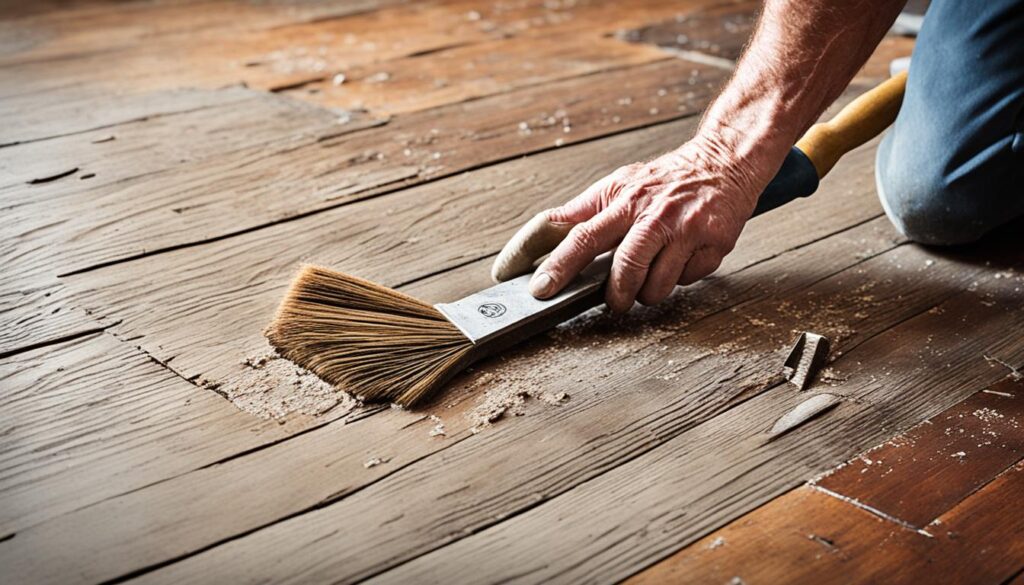
Hand scraping involves manually scraping the surface of the planks with a hand-held scraper. This process creates variations in texture and tone, mimicking the wear and tear of years gone by. The gentle imperfections left behind by hand scraping give your floors a well-worn look, reminiscent of a time-honoured heirloom. Each scrape reveals the unique grain patterns, adding depth and visual interest to the overall appearance.
Wire brushing, on the other hand, works by removing the softwood between the grains of the hardwood. This technique enhances the natural grain pattern, highlighting its beauty and creating a textured effect. The bristles of the wire brush gently scrape away the softer wood, leaving the harder grains intact. This process not only brings out the wood’s natural texture but also adds a touch of roughness and depth to the surface, making the floor look aged and vintage.
Both hand scraping and wire brushing can be used separately to achieve specific effects or combined for a more pronounced vintage look. The choice depends on the desired aesthetic and the unique characteristics of your hardwood flooring.
To give you a visual appreciation of the stunning outcomes that can be achieved with hand scraping and wire brushing, take a look at the image below:
If you’re searching for a way to infuse your space with timeless elegance and vintage appeal, consider incorporating hand scraping and wire brushing techniques into your wood floor restoration project. These methods not only revive your flooring but also add a touch of history and character to your home or business.
Staining, Bleaching, and Faux Aging with Paint for Vintage Wood Floor Restoration
Staining, bleaching, and faux aging with paint are essential techniques in the process of vintage wood floor restoration. These methods provide homeowners with a wide range of possibilities to create an aged and antique look for their hardwood floors.
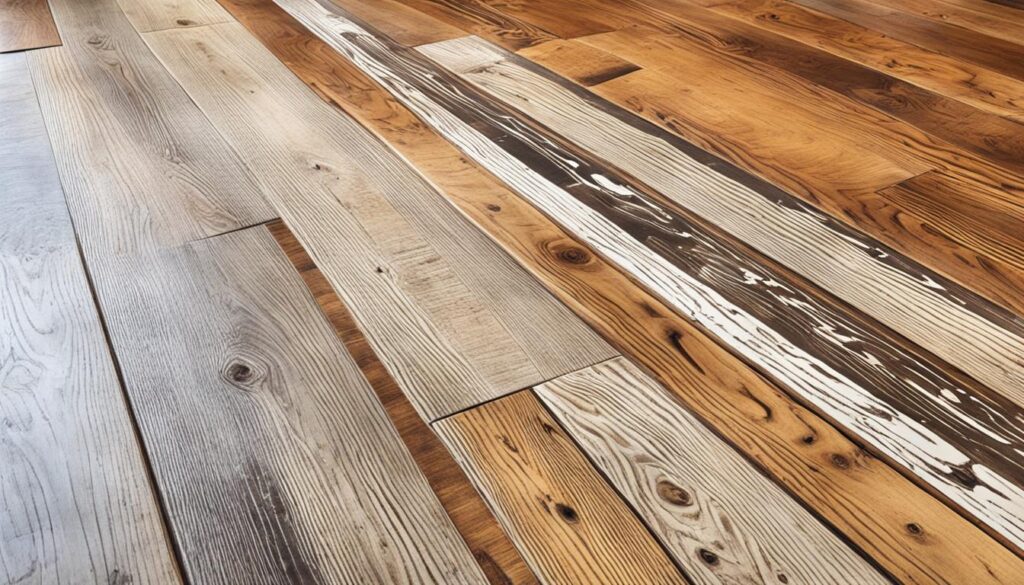
One technique involves strategically applying darker stains to high-traffic areas or places where natural wear would occur. By doing so, homeowners can achieve an aged patina that adds depth and character to the floor. This staining method creates a beautiful contrast between the worn and untouched areas, creating a truly vintage feel.
Another technique, bleaching, lightens the wood to mimic the effects of sun exposure and weathering. This technique gives the floor a faded and rustic appearance, reminiscent of a well-aged piece of furniture or flooring.
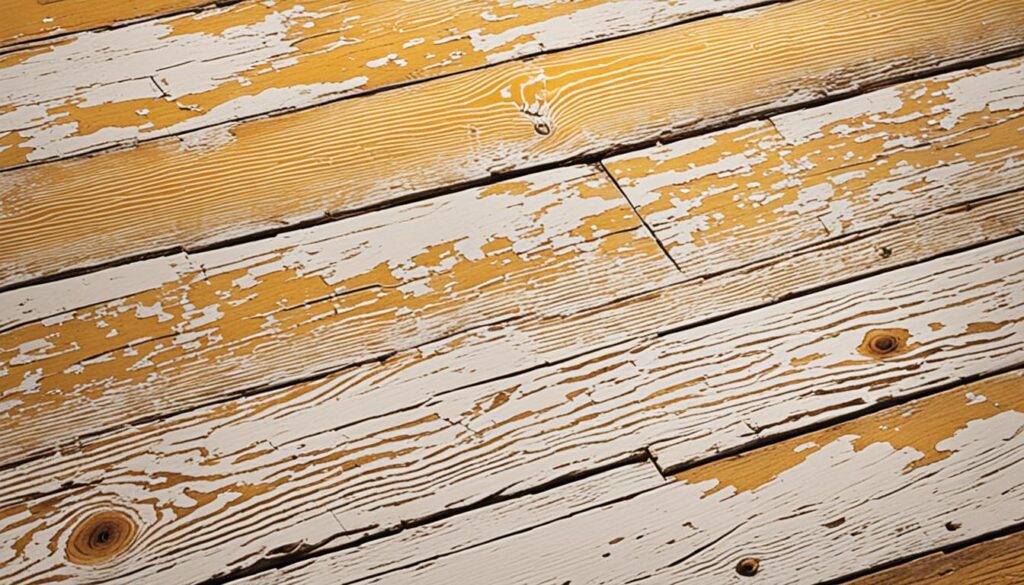
Faux aging with paint is a popular method for adding a vintage charm to wood floors. This technique involves layering various shades of paint, distressing, and sanding to create the illusion of peeling or chipped paint. The result is a beautifully aged and weathered look that adds character and authenticity to the floor.
Benefits of Staining, Bleaching, and Faux Aging
- Creates an authentic antique look
- Adds depth and character to the flooring
- Provides a beautiful contrast between worn and untouched areas
- Enhances the rustic and weathered appearance
- Brings a vintage charm to any space
These techniques offer homeowners the opportunity to transform their old wood floors into stunning vintage masterpieces. By carefully selecting the right combination of staining, bleaching, and faux aging with paint, each floor can be customized to achieve the desired aesthetic. Whether aiming for a shabby chic look or a classic vintage style, these techniques provide endless possibilities for creating a timeless and enchanting atmosphere in any home or business.
Filling Cracks and Gaps in Vintage Wood Floor Restoration
Gaps and cracks are common features in aged hardwood flooring. To replicate this characteristic, homeowners can intentionally create gaps between the planks and fill them with a tinted wood filler that matches the floor color. Sanding the filled gaps helps to achieve a seamless integration and a weathered appearance, giving the floor an authentic antique look.
Creating Authentic Gaps and Cracks
When aiming to restore vintage wood floors, creating gaps and cracks is a crucial step in achieving an authentic aged appearance. By intentionally leaving spaces between the planks during the installation process, homeowners can mimic the natural wear and tear that occurs over time. These gaps will play a significant role in capturing the vintage charm of the floor.
It’s important to note that the size and number of gaps should be carefully considered to strike the right balance between authenticity and practicality. While larger gaps may provide a more weathered and rustic look, they can make the floor less stable and prone to collecting debris. Smaller gaps, on the other hand, maintain stability but may not deliver the desired vintage aesthetic.
Filling the Gaps
After creating the intentional gaps, the next step is to fill them with a tinted wood filler that complements the floor color. The wood filler should be chosen based on its compatibility with the flooring material and its ability to blend seamlessly with the surrounding wood.
When selecting a wood filler, consider its durability and flexibility to ensure a long-lasting and secure bond. Opt for high-quality fillers that resist shrinking, cracking, and crumbling over time. It’s also advisable to choose a filler that can be sanded and finished along with the rest of the floor, allowing for a uniform appearance.
Note: When working with vintage floors, it’s advisable to consult a professional wood floor restoration specialist who can provide expert advice and guidance tailored to your specific project.
Sanding and Finishing
Once the gaps have been filled, the next step is to sand the entire floor, including the filled areas, to achieve a smooth and cohesive surface. Sanding eliminates any inconsistencies or irregularities, ensuring that the filled gaps seamlessly blend with the rest of the flooring.
After sanding, apply a suitable finish to enhance the vintage aesthetic of the wood floor while providing added protection and durability. Consider using a finish that replicates the look and feel of aged wood, such as a matte or satin finish with subtle variations in color and sheen.
Benefits of Filling Cracks and Gaps
- Replicates the authentic look of aged hardwood flooring
- Enhances the vintage aesthetic of the space
- Provides stability and durability to the floor
- Prevents the accumulation of dirt and debris in gaps
- Creates a seamless and weathered appearance
Remember, vintage wood floor restoration is a meticulous process that requires careful attention to detail. If you’re unsure about filling cracks and gaps yourself, it’s recommended to hire a professional antique wood floor repair specialist who can expertly execute the restoration while preserving the unique charm of your vintage flooring.
Real-Life Scenario: Antique Wood Floor Repairs
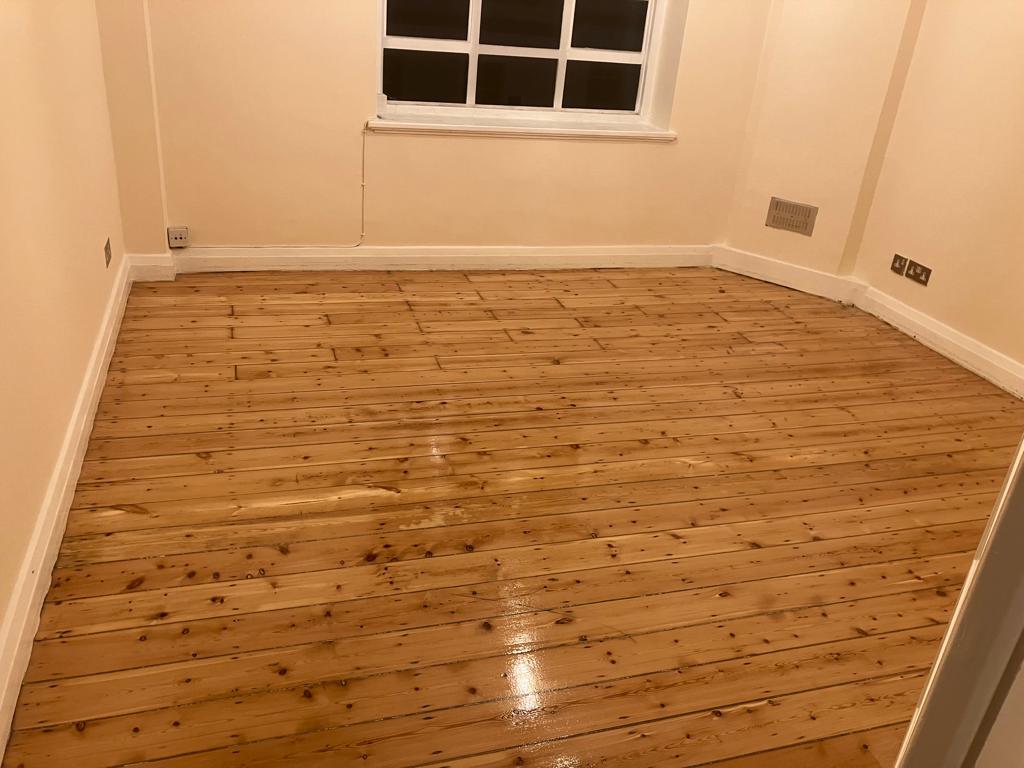
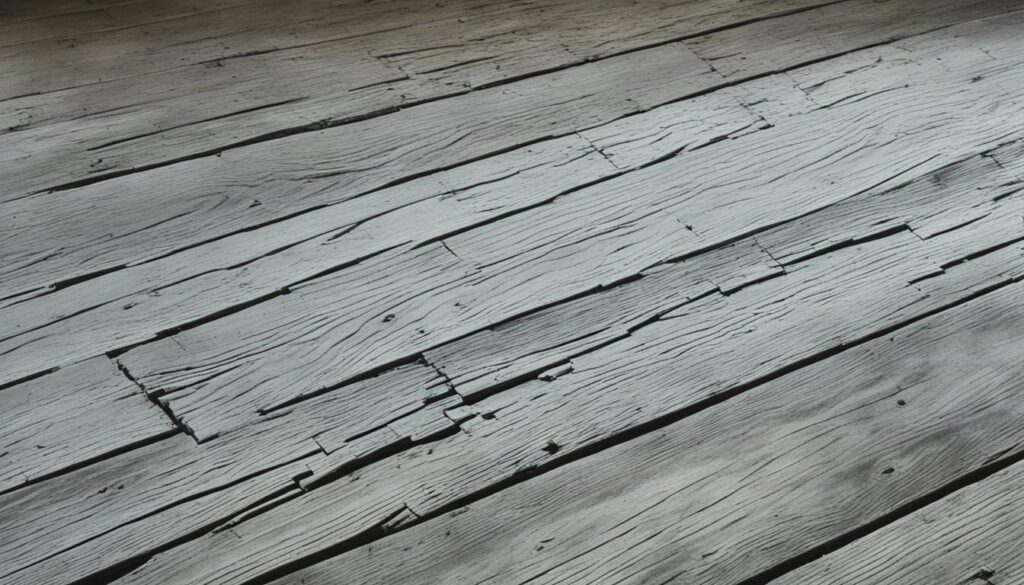
Let’s take a look at a real-life scenario where the process of filling cracks and gaps was employed to restore a stunning antique wood floor. Mr. James, a homeowner with a passion for period homes, recently purchased a Victorian-era house with original hardwood floors that were showing signs of age and wear.
Mr. James recognized the importance of preserving the vintage charm of the house and wanted to restore the wood floors to their former glory. After consulting with a wood floor restoration specialist, he decided to fill the cracks and gaps to achieve an authentic antique look.
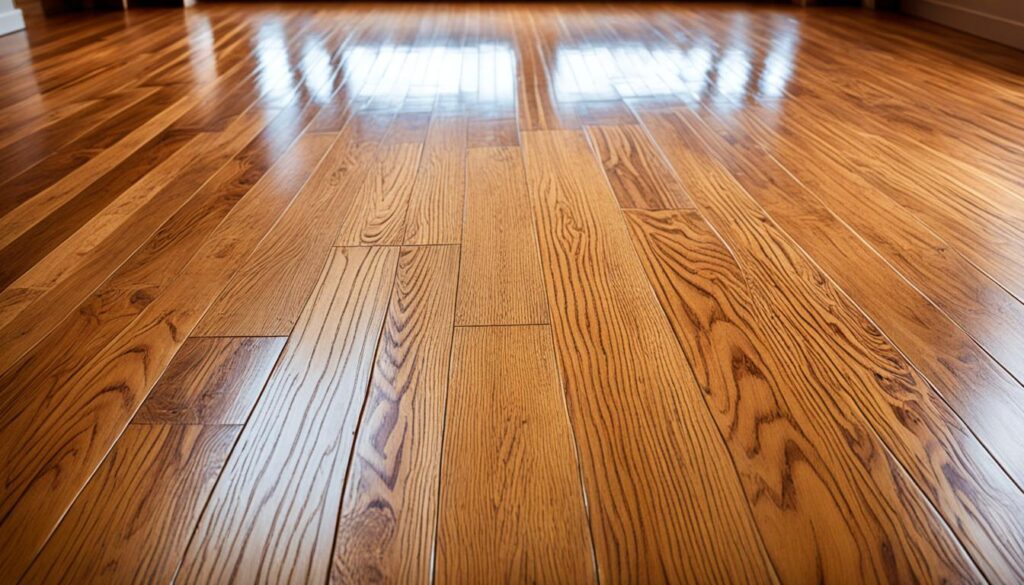
The restoration process began by intentionally creating gaps between the planks and then filling them with a wood filler that closely matched the floor color. The filled gaps were carefully sanded to ensure a seamless integration with the rest of the floor. Finally, a matte finish was applied to enhance the vintage aesthetic and provide long-lasting protection.
| Before Restoration | After Restoration |
|---|---|
 |
 |
Applying a Patina for Vintage Wood Floor Restoration
Adding a patina to hardwood floors is a key technique in the process of vintage wood floor restoration. This method creates depth and dimension, giving the floor an aged and weathered appearance. The patina solution, consisting of vinegar, steel wool, and tea or coffee grounds, reacts with the wood’s tannins, resulting in a unique and authentic vintage look.
Homeowners can experiment with different ingredients and application techniques to achieve the desired balance and achieve the desired result. By carefully adjusting the mixture and the amount of time it is left on the wood, they can create a patina that replicates the beautiful wear and tear of time.
Applying the patina solution is a simple process. First, a mixture of vinegar and steel wool is brewed for a period of time, allowing the steel wool to dissolve. The tea or coffee grounds are then added to the solution, creating a rich color. The mixture is applied to the wood floor using a brush or cloth, ensuring an even distribution.
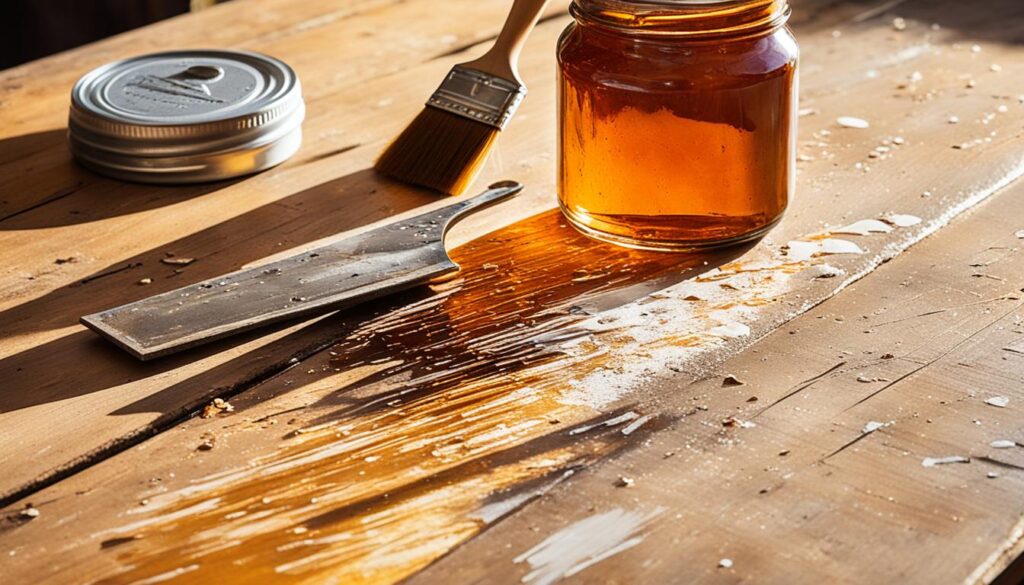
Once applied, the patina solution should be left to dry and react with the wood’s tannins. The length of time required for the desired effect varies depending on factors such as the wood type and the desired level of aging. Homeowners may need to experiment with multiple applications and drying times to achieve the desired vintage look.
The result of applying a patina is a stunning vintage wood floor that adds character and charm to any space. The aged and weathered effect brings a sense of history and tradition, creating a focal point and a unique atmosphere.
Benefits of Applying a Patina for Vintage Wood Floor Restoration:
- Creates an authentic vintage look
- Adds depth and dimension to the wood
- Enhances the character and charm of the floor
- Allows for creative expression and customization
- Brings a sense of history and tradition to the space
Applying a patina to vintage wood floors is an art form that requires experimentation and attention to detail. With the right techniques and materials, homeowners can achieve stunning results, preserving the beauty of historic wood floors for years to come.
Conclusion
Vintage wood floor restoration offers homeowners the opportunity to bring timeless elegance to their spaces. By utilizing techniques such as hand scraping, wire brushing, staining, bleaching, faux aging with paint, filling cracks and gaps, and applying a patina, new hardwood floors can be transformed into beautiful, aged masterpieces. The varied methods in vintage wood floor restoration allow for creative expression and experimentation, resulting in truly unique and enchanting atmospheres.
Whether in classic or retro styles, vintage wood floor restoration adds character and charm to any home or business, creating a lasting and timeless appeal. Homeowners can achieve a classic wood floor refinishing that complements their interior design, while retro wood floor repair can transport them back to a bygone era. The versatility of vintage wood floor restoration ensures that each space becomes a conversation starter, evoking a sense of nostalgia and history.
Investing in vintage wood floor restoration not only enhances the aesthetic appeal of a space but also preserves the beauty and integrity of the wood. With proper care and maintenance, these restored floors can continue to shine for years to come. So, whether you desire the elegance of the past or the chic nostalgia of retro styles, vintage wood floor restoration is the perfect solution to transform your space into a showcase of timeless beauty.